Much of Palm Bay was laid out in quarter-acre lots, and between dogs, children, pools and close neighbors, plenty of households want a clear line around the property. Palm Bay Fence & Gate is a fence company for homeowners across Palm Bay, and the work covers new vinyl, aluminum, wood and chain link fencing, plus repairs to the fence you already have.
Many of the calls come from people who just closed on a new house on a lot that has never been fenced. Others have an old wood fence that has gone gray and wobbly, a pool deck that needs an enclosure, or a run of panels that has started to lean toward the neighbor.
Everything begins with a visit. We come out, walk the line with you, talk over materials, heights and gates, and give you a free quote.
There is no need to know the difference between a rail and a picket before you call. A rough idea of where the fence should go and what it has to do is plenty: keep a dog in, block a view, close off the pool, or simply mark the edge of the yard.
Each type of work our fence company handles has its own page: vinyl fences, aluminum fences, wood fences and fence repair.
Call 321-635-0242 or use the form to set up a visit.
Free quote. No obligation.
Most fence projects in the city fit one of the groups below. A larger yard often mixes two, such as aluminum around the pool and solid vinyl along the back line.


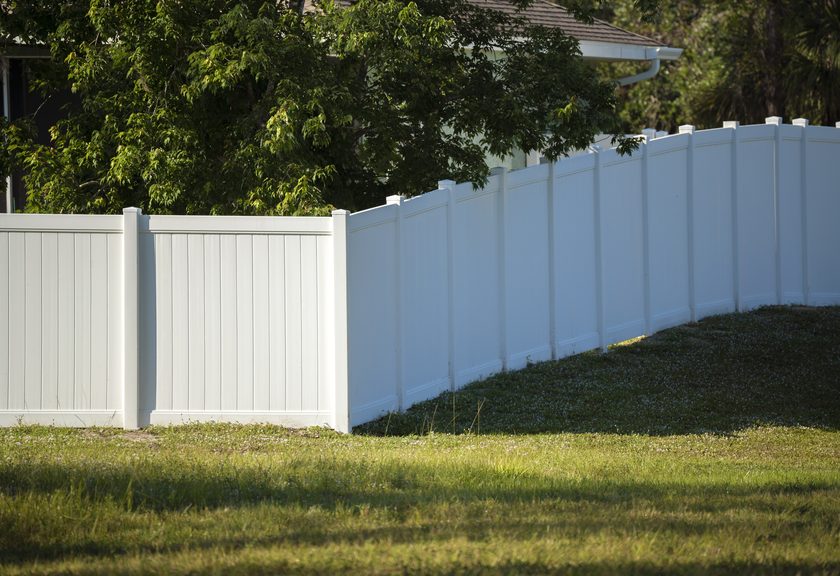
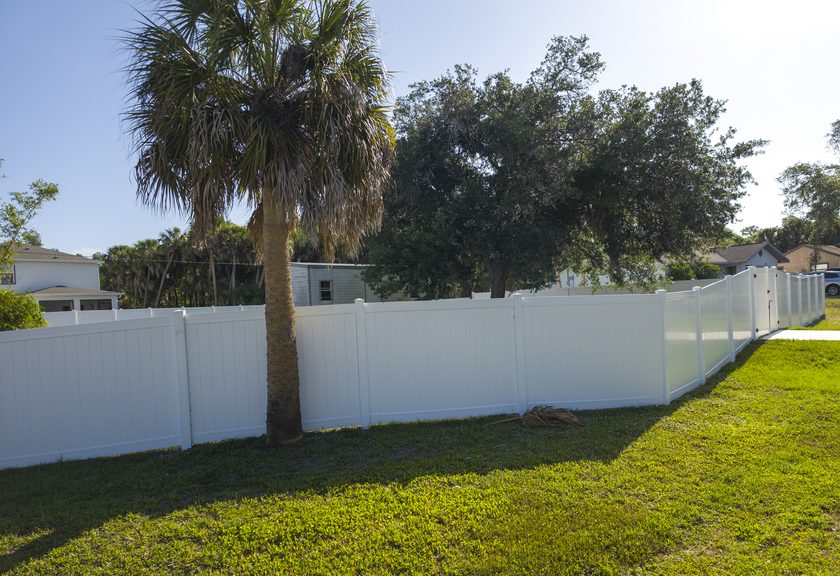
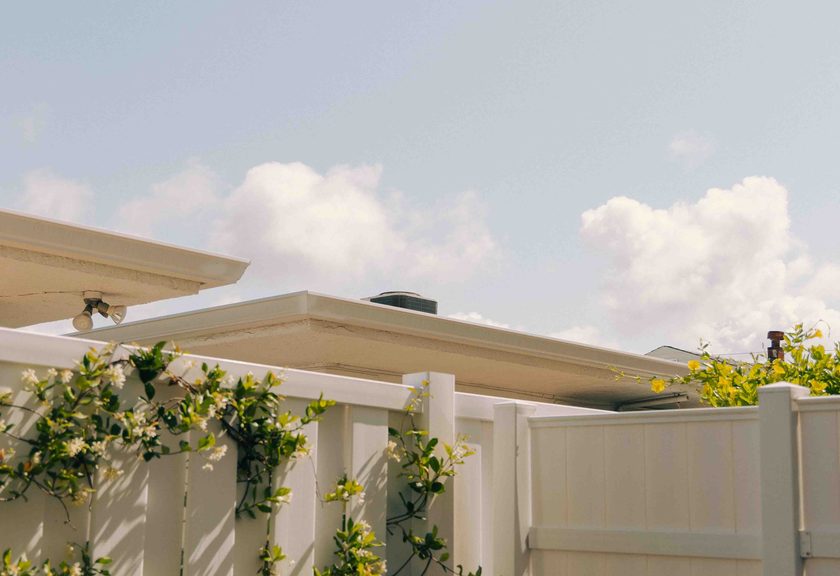
White vinyl is a common sight on newer streets, and many owners choose it for a privacy fence around the back yard. It is not painted or stained the way wood is, and a garden hose with a soft brush takes off most of the dirt and mildew that builds up in the humidity.
A vinyl fence is a system of posts, rails and panels. The posts go into the ground, the rails slide into openings routed in the posts, and the boards lock into the rails. Because the sections come in set widths, the layout has to be planned so corners, gates and the ends of each run fall in sensible places.
Styles go beyond the plain white panel. A lattice or spaced top lets a little air and light through, short picket sections suit a front yard, and tan, gray and woodgrain finishes are also made. The vinyl fence page walks through each option.
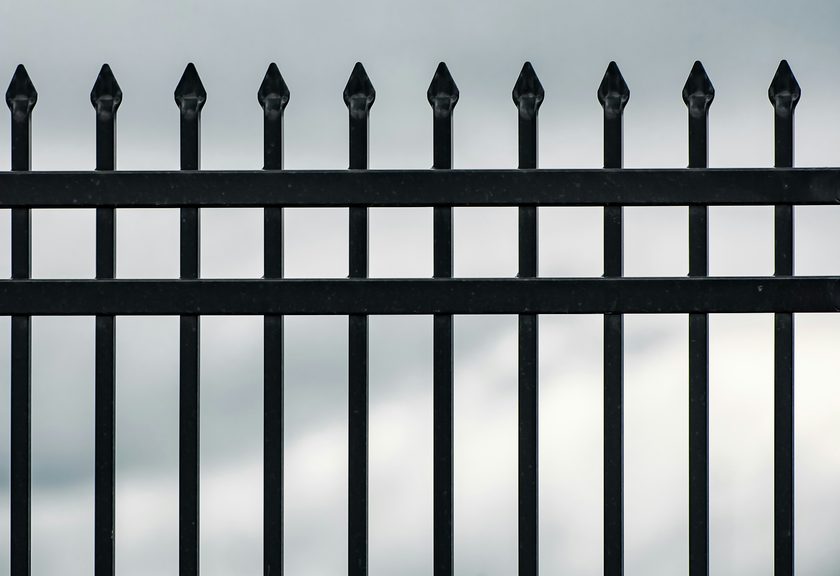
Many Palm Bay homes have pools, and aluminum is a common fence around them. It is the open, picket-style fence you see around screened and unscreened pool decks, behind homes that back onto a canal or a retention pond, and across the front of houses where a solid fence would look out of place.
Aluminum is light, it usually comes with a powder-coated finish in black or bronze, and the gaps between pickets let wind pass through rather than push against a solid face. It also keeps the view, which is the whole point on a lot that looks across water.
A pool fence is its own kind of project. Gate swing, self-closing hinges, latch height, the gap at the bottom and the spacing between pickets all come into it, and pool barriers have their own rules. Your city or county building department can tell you what your pool needs. The aluminum fence page covers the questions worth asking.
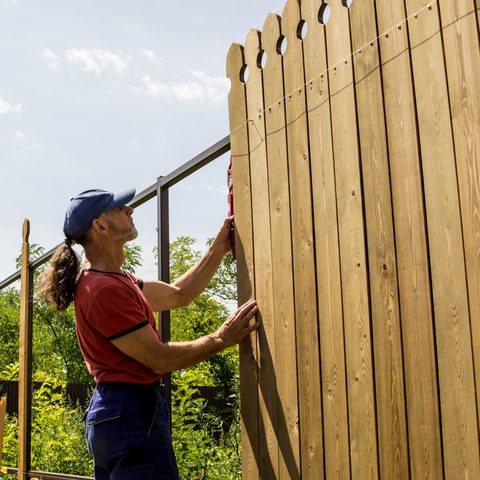
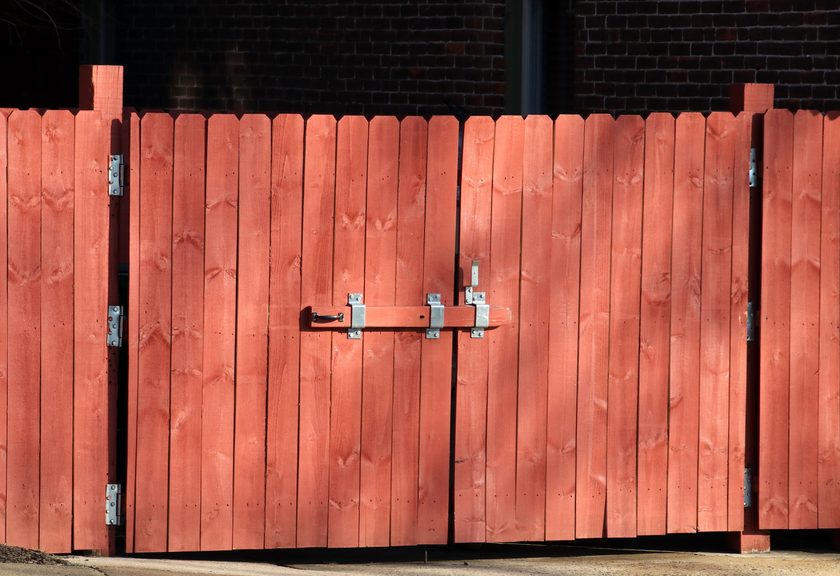
Wood is still common on older Palm Bay streets. A wood privacy fence has a warm look, it can follow an odd property line, and individual boards can be replaced one at a time.
Most residential wood fencing in Florida is pressure-treated pine, sometimes with cedar pickets or a cap board along the top. The usual styles are stockade, with boards butted side by side; board-on-board, where a second layer of boards covers the gaps in the first; and shadowbox, where boards alternate sides of the rails with an air gap between them.
Wood asks more of its owner than the other materials. Sun, rain and sprinkler spray all work on it, and a coat of stain or sealer every few years keeps it looking its best. The wood fence page has more on styles, gates and upkeep.
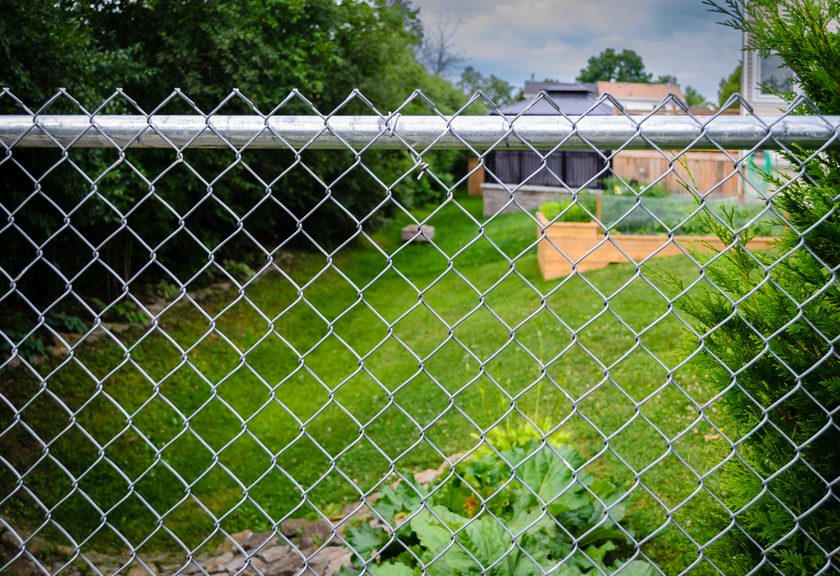
Chain link rarely gets much attention, yet it still does plenty of work around Palm Bay. It keeps a dog in, closes off a vegetable garden, and runs along the back of a deep lot where nobody needs privacy. On a large or wooded property it is a practical way to enclose a lot of ground.
Plain galvanized mesh is the familiar silver kind. Vinyl-coated chain link, usually black or green, fades into the landscaping. Privacy slats can be woven into the mesh, though a slatted fence catches much more wind than open mesh does.
Tick chain link on the form or mention it when you call 321-635-0242, and it is quoted the same way as any other fence.
Wind is part of life on the Space Coast, and the fence repair page looks back at the hurricanes that have reached Palm Bay.
Most fence repair has nothing to do with hurricanes, though. Posts loosen as rain washes soil away from their footings. Gates sag and drag after a hinge post shifts. A sprinkler head soaks the same boards day after day. A trailer or a car clips the corner post.
When a storm does bring a fence down, stay well back from any section touching a power line and call your utility. After that, a fallen run can often be judged section by section: some panels go back up, and some posts need resetting or replacing.
New houses keep going up across Palm Bay. Much of the city began as Port Malabar, the subdivision General Development Corporation bought and platted starting in 1959, with lots that were typically a quarter acre. The company sold those lots to buyers all over the country. Many stayed empty for years, and today houses are filling them in street by street while newer communities such as Emerald Lakes add more.
A fence on a new lot starts with the property line. The boundary survey from your closing shows the lines, and the markers set at the corners are the best guide on the ground. If those survey stakes have been buried by sod or knocked out by the builder, a surveyor can come back and set them again before any posts go in.
Drainage comes next. Many Palm Bay lots shed water toward a swale along the street or a ditch at the back, and drainage and utility easements often run along the lot lines. A fence that blocks a swale or sits inside an easement can cause trouble later, so compare the plan with your survey and ask the city before settling where the fence runs. Have buried lines marked before digging.
In planned communities, the homeowners association usually has a say in fence style, color and placement. Get its approval in hand before anything is ordered, so the fence that goes up is one the association has already signed off on.
No material suits every yard, and nothing outdoors stays new-looking forever under Florida sun. What you can do is match the material to where the house sits and what the fence needs to do.
Homes on the east side of the city, closest to the Indian River Lagoon, see more salt in the air than homes farther inland, such as those in Bayside Lakes. Hinges, latches and screws are where it usually shows first, so ask about hardware finishes along with the fence itself.


Tell us roughly how much fence you want, which material you are leaning toward, and whether a pool or a dog is involved. If you have a survey handy, have it nearby when we talk.
We come out, measure the run, look at the ground, the gates and anything in the way, and give you a free quote. This is the time to ask about removing an old fence or changing a gate width.
Before work starts, check with the city about any permit, get HOA approval if your neighborhood has an association, and confirm the corner markers. Buried utilities are marked so post holes stay clear of them.
When the fence is up, walk it with the installer. Swing every gate, check the latches, and point out anything that doesn’t look right before the job is closed out.
Every yard is different, so a fence company can only give a real price after the line has been walked. The visit and the quote are free. These are the things that move the number:
| Factor | Why it matters |
|---|---|
| Length of the run | More footage means more posts, more panels or boards, and more labor |
| Material and style | Vinyl privacy, aluminum picket, wood board-on-board and chain link are each priced differently |
| Height | Taller sections use more material and need sturdier posts |
| Gates | Each gate adds posts and hardware, and a double drive gate adds more |
| Ground and access | Tree roots, old concrete, slopes, swales and a tight path to the back yard all add work |
| The old fence | Taking out and disposing of an existing fence is part of some jobs |
| Pool details | Self-closing gates and special latches go on many pool enclosures |
The jobs that climb highest usually combine a long run, a tall privacy style and several gates. Pricing two materials side by side, such as vinyl along the back and aluminum around the pool, is easy to do at the same visit.
A real figure needs a real look. Call 321-635-0242 and we’ll set a time to come out.
Palm Bay is the most populous city in Brevard County and the largest by land area, so the name covers a lot of ground. Inside the city, that includes neighborhoods such as Port Malabar, Bayside Lakes, Lockmar, Palm Bay Colony, Emerald Lakes and the streets near Turkey Creek.
Turkey Creek winds through the northeast side of town on its way to the Indian River Lagoon, and the Turkey Creek Sanctuary keeps a stretch of it wooded, with boardwalks over the swamp. A drainage canal system begun in the 1920s, and greatly expanded once Port Malabar was laid out, runs through much of the city.
Beyond the city limits, calls come from nearby towns such as Melbourne, West Melbourne, Malabar and Grant-Valkaria. Not sure your street is in range? Ask when you call 321-635-0242.
That question belongs with the City of Palm Bay’s building department, and it is worth asking before you sign with any fence company. The city can also tell you about setbacks, corner lots and easements that affect where a fence may go. In a planned community, the homeowners association has its own approval step on top of that.
Start with the boundary survey from your closing. It shows the lot lines and the corner markers the surveyor set. If those markers have vanished under sod or fill, a surveyor can return and mark them again. An old fence or a neighbor’s hedge is not a reliable guide to the line.
Often it can, as long as the old line matches the survey. The old fence is normally taken out first and new posts are set, since old post holes and concrete rarely line up with new panels. Ask whether removal of the old fence can be included in the quote.
Aluminum is the usual pick, because it is open, it doesn’t block the view of the water, and it suits a pool deck. Vinyl is chosen where privacy matters more. Pool barriers carry their own set of rules, so ask your city or county building department what yours needs before the style is settled.
Calls come from across Palm Bay and from nearby towns such as Melbourne, West Melbourne, Malabar and Grant-Valkaria. If you are farther out than that, call 321-635-0242 and ask about your street.